
Unlock Your Brain’s Potential: The Complete Guide to IQ Puzzles Benefits, Types & Solving Strategies
Disclosure: This article is authored by Puzzlex Shop and features information about its products and services.
Last Updated: May 29, 2024
An IQ puzzle is any mental challenge designed to test and improve cognitive abilities such as logical reasoning, spatial awareness, memory, and problem-solving speed. Unlike casual puzzles, IQ puzzles are deliberately structured to push your brain beyond its comfort zone, often requiring creative thinking and pattern recognition. Regularly engaging with these puzzles has been shown to boost measurable intelligence scores, improve memory and concentration, and even promote neuroplasticity — the brain’s ability to rewire itself. Whether you are a beginner looking for a new hobby or an adult seeking a proven brain training tool, understanding what an IQ puzzle offers can unlock lasting mental benefits.
Key Takeaways
- Definition: IQ puzzles are mental challenges designed to test and improve cognitive functions like logic, spatial reasoning, and memory.
- Benefits: They boost IQ, improve memory, concentration, and problem-solving, and promote neuroplasticity, aiding in cognitive reserve.
- Daily Practice: Just 25 minutes of puzzle-solving daily can boost IQ by 4 points, as measured by organizations like Visiting Angels.
- Variety is Key: Engage with different types—logic, 3D, wooden, jigsaws—to challenge various cognitive domains.
- Strategy: Effective solving involves understanding the goal, breaking problems into parts, eliminating options, and taking strategic breaks.
Table of Contents
- What Is an IQ Puzzle? A Clear Definition
- A Short History of IQ Puzzles: From Intelligence Tests to Brain Training
- Are IQ Puzzles Good for Your Brain? The Scientific Evidence
- Key Cognitive Benefits of IQ Puzzles (For All Ages)
- Types of IQ Puzzles: A Comprehensive Overview
- IQ Puzzles for Different Age Groups
- How to Solve IQ Puzzles: Effective Strategies and Techniques
- How to Choose the Best IQ Puzzle Games: A Buyer’s Guide
- Best Wooden IQ Puzzle Recommendations
- Integrating IQ Puzzles into Your Daily Routine
- Author Profile
- Frequently Asked Questions
- Conclusion: Start Your Puzzle Journey Today
What Is an IQ Puzzle? A Clear Definition
IQ puzzle is a category of mental exercise that measures or enhances intelligence-related skills such as logic, spatial reasoning, verbal fluency, and mathematical ability. These puzzles are often used in intelligence tests but are also found in standalone games like wooden brain teasers, 3D assembly kits, and complex jigsaw puzzles. The primary function of an IQ puzzle is to challenge the solver to find a non-obvious path, using a mix of analysis, creativity, and persistence.
They matter because they simulate real-world problem-solving scenarios, giving you a safe space to train mental agility. Unlike mindless scrolling, a good IQ puzzle forces your brain to engage multiple regions simultaneously, strengthening neural connections over time.
A Short History of IQ Puzzles: From Intelligence Tests to Brain Training
The concept of IQ puzzles dates back to the early 20th century, when psychologists began developing standardized intelligence tests. Alfred Binet and Théodore Simon created the first modern IQ test in 1904, which included non-verbal reasoning tasks — the ancestors of today’s puzzles. Later, puzzle designers like Erno Rubik (inventor of the Rubik’s Cube in 1974) transformed abstract cognitive tests into tangible, mass-produced challenges. Today, the term IQ puzzle spans everything from simple brain teasers to complex best wooden IQ puzzles that require hours of focused effort. This evolution reflects a growing understanding that intelligence is not fixed — it can be trained, especially through targeted puzzle play.
Are IQ Puzzles Good for Your Brain? The Scientific Evidence
Are IQ puzzles good for your brain? Yes, and the research is compelling. A study published in the journal PMC NCBI (article PMC6174231) found that “jigsaw puzzling strongly engages multiple cognitive abilities and long-term, but not short-term JP experiences correlate with better cognitive performance for reasons that are not yet understood.” This suggests that persistent puzzle practice — not a single session — builds cognitive resilience.
According to Visiting Angels, “puzzles can improve peoples’ memory, concentration, vocabulary, and reasoning skills, thus raising their IQs. Doing puzzles for at least 25 minutes daily can boost IQ by 4 points.” This measured data comes from studies cited by the organization. Dr. Vladimir Hachinski, a Canadian neurologist, confirmed that “it can certainly help you concentrate if you spend an hour or two doing puzzles.”
The IQ puzzle benefits extend beyond raw intelligence. St. Joseph’s Health notes that “activities like puzzles and word games stimulate neuroplasticity, which is the brain’s ability to adapt and create new connections.” This process is critical for preventing cognitive decline and memory loss. A Case Western Reserve University expert explains: “Puzzles often give chances to practice different cognitively challenging tasks in different combinations. The very best thing doing a puzzle [does is] allows you to learn to problem solve.”
Puzzles set off a complex chain of events in the brain, activating up to eight cognitive functions when building a jigsaw — including visual perception, working memory, and pattern recognition (YouTube, Neurology expert explanation). In sum, regular puzzle engagement is one of the most effective, low-cost ways to maintain and sharpen your mental faculties.
Key Cognitive Benefits of IQ Puzzles (For All Ages)
Memory Improvement
Puzzles require you to recall shapes, colors, patterns, and strategies from previous attempts. This repeated recall strengthens short- and long-term memory pathways. A brain training puzzle like a memory-matching game directly exercises the hippocampus, the brain’s memory center.
Logical Reasoning & Problem-Solving
A logic IQ puzzle forces you to evaluate multiple possibilities, eliminate wrong answers, and deduce the correct sequence. Over time, this sharpens deductive reasoning, which is the foundation of everyday decision-making.
Spatial Awareness
3D wooden puzzles and packing puzzles train your ability to visualize objects rotating, fitting, or nesting. This skill is critical for careers in engineering, architecture, and even everyday tasks like parking a car.
Concentration & Focus
In a world of interruptions, puzzles demand sustained attention. Dr. Hachinski’s observation holds true: spending an hour or two with a puzzle trains you to block out distractions, improving executive function.
Neuroplasticity and Dementia Prevention
As stated by Rest in Pieces, “puzzles promote neuroplasticity, which can aid in preventing conditions like memory loss and dementia.” A mind that regularly practices novel, complex tasks is more likely to build “cognitive reserve” — a buffer against age-related decline. For more on maintaining a sharp mind, explore our articles on Brain Health.
Types of IQ Puzzles: A Comprehensive Overview
Classic Jigsaw Puzzles
Though often seen as simple pastimes, jigsaw puzzles with high piece counts (1000+) are genuine IQ puzzles. They require visual matching, patience, and systematic searching. The PMC study cited above confirmed that jigsaw puzzling taps multiple cognitive abilities.
Logic IQ Puzzles
These include grid-based puzzles (like Sudoku), nomograms, and deductive reasoning puzzles (like Einstein’s Riddle). A logic IQ puzzle trains sequential thinking and hypothesis testing.
Brain Teasers and Riddles
Quick, often verbal, puzzles that require lateral thinking. They are excellent warm-ups for the brain and can be done anywhere.
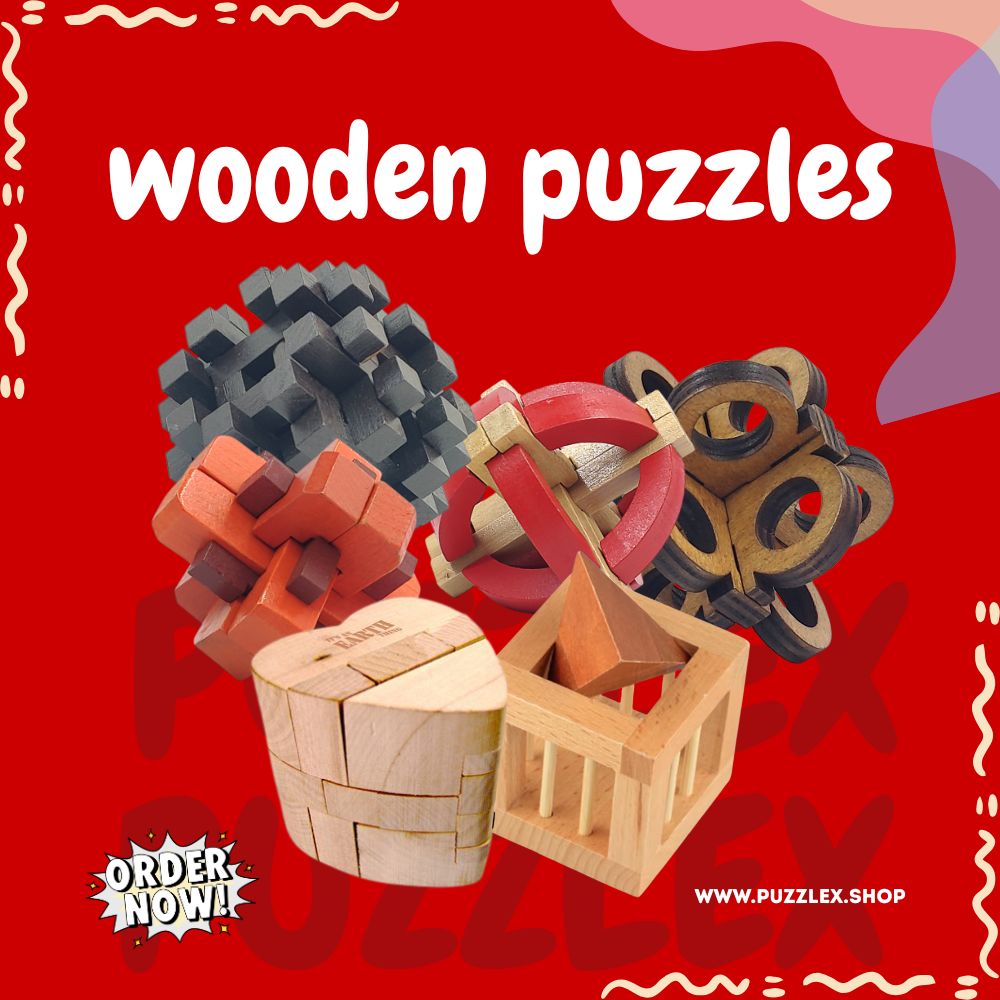
Wooden IQ Puzzles
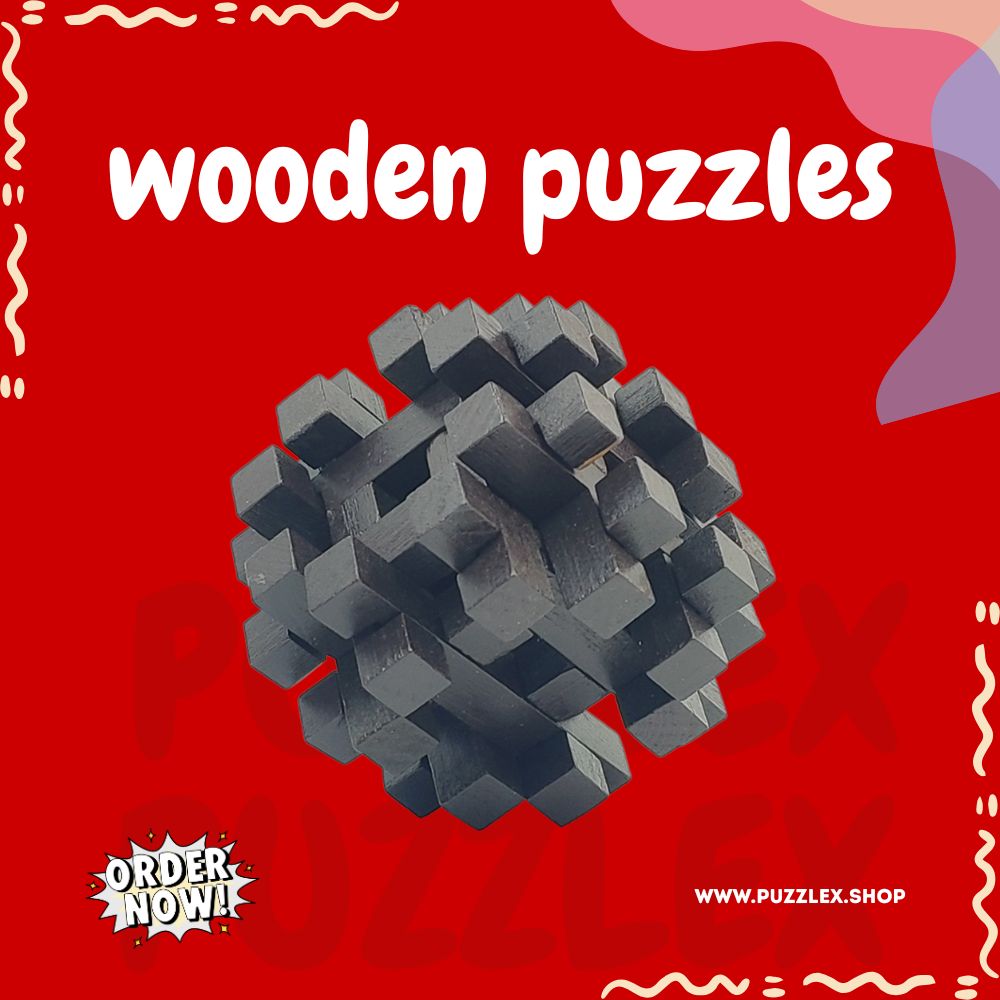
Tangible, often interlocking pieces made from wood. The best wooden IQ puzzle is typically a 3D assembly or a difficult disentanglement puzzle. Their tactile nature adds a sensory layer that enhances engagement. Popular types include:
- 6-piece interlocking wooden puzzles
- Wooden puzzle boxes with hidden compartments
- Burr puzzles and knot puzzles
3D Puzzles & Assembly Kits
These require building a three-dimensional object from flat pieces or connecting rods. They strengthen spatial reasoning and are a favorite among adults looking for IQ puzzle for adults that also offers a satisfying display piece.
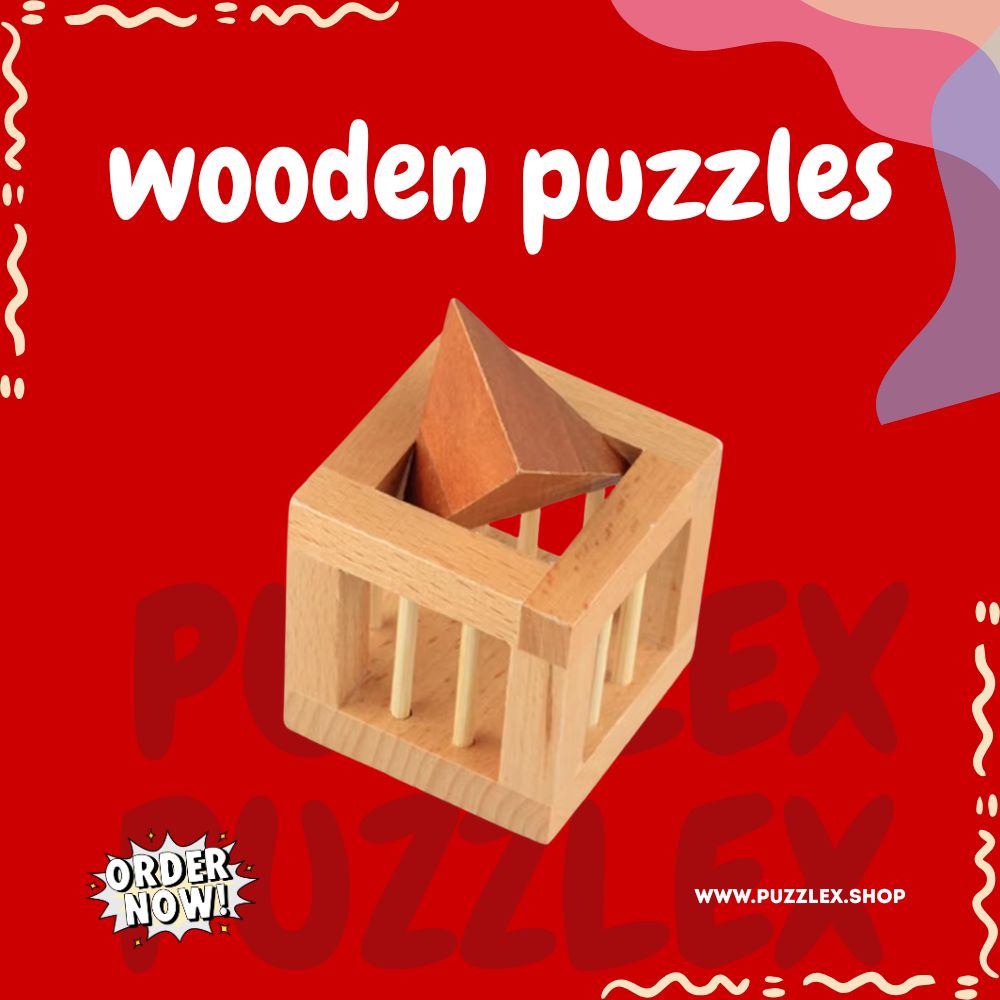
Packing Puzzles
You must fit a set of oddly shaped pieces perfectly into a container. These test geometry and patience — a classic example is the Tangram.
IQ Puzzles for Different Age Groups
IQ Puzzle for Adults: Why It Matters
Adults often seek IQ puzzle for adults not just for fun but for cognitive maintenance. Busy professionals, retirees, and students all benefit. A challenging puzzle can be a “workout for the brain” that delays cognitive aging. According to the Case Western Reserve University expert, the best thing puzzles do is teach you to problem-solve — a skill that never goes out of style. Recommended types for adults include complex wooden puzzles, 3D assembly kits, and multi-step logic puzzles.
IQ Puzzle for Beginners: Starting Smart
If you are new to puzzle solving, start with simpler logic puzzles or small jigsaws. IQ puzzle for beginners should have low frustration and clear feedback. Many wooden puzzles labelled “level 1” are perfect entry points. As your skills grow, you can move up to higher difficulty levels. The key is consistency — aim for 15-25 minutes daily.
IQ Puzzle for Brain Development in Children
Puzzles are crucial for developing executive functions in children. They improve pattern recognition, patience, and fine motor skills. The IQ puzzle for brain development in kids often includes shape sorters, simple mazes, and age-appropriate jigsaws. However, our focus here is on adult and teen audiences.
Seniors and Cognitive Reserve
For older adults, puzzles can be a powerful tool to maintain independent thinking. The neuroplasticity stimulated by puzzles helps build a reserve against dementia. Choosing a variety of puzzle types keeps the challenge fresh.
How to Solve IQ Puzzles: Effective Strategies and Techniques
Learning how to solve IQ puzzles is a skill in itself. Whether you face a logic grid, a wooden burr, or a tricky brain teaser, these universal strategies will help.
Step 1: Understand the Goal
Before starting, clarify the end state. What does “solved” look like? For a packing puzzle, every piece must fit flush. For a logic puzzle, all variables must satisfy given constraints.
Step 2: Break the Problem into Parts
Chunking reduces cognitive load. If solving a 3D wooden puzzle, separate pieces by shape or color. For a logic puzzle, draw a grid and fill in what you know.
Step 3: Eliminate Impossible Options
Deduction is powerful. Rule out obviously wrong configurations, then test remaining possibilities. This is the heart of a logic IQ puzzle.
Step 4: Use Trial and Error (Systematically)
Make one change at a time and note the result. This is how you learn the puzzle’s behavior. Keep track of what doesn’t work to avoid repeating mistakes.
Step 5: Take Strategic Breaks
When stuck, step away. Your subconscious will continue processing. Often, the answer comes shortly after you stop forcing it.
Step 6: Practice Pattern Finding
Many IQ puzzles rely on visual or numerical patterns. Train yourself to spot sequences: increasing/decreasing values, symmetry, or recurring shapes.
How to Choose the Best IQ Puzzle Games: A Buyer’s Guide
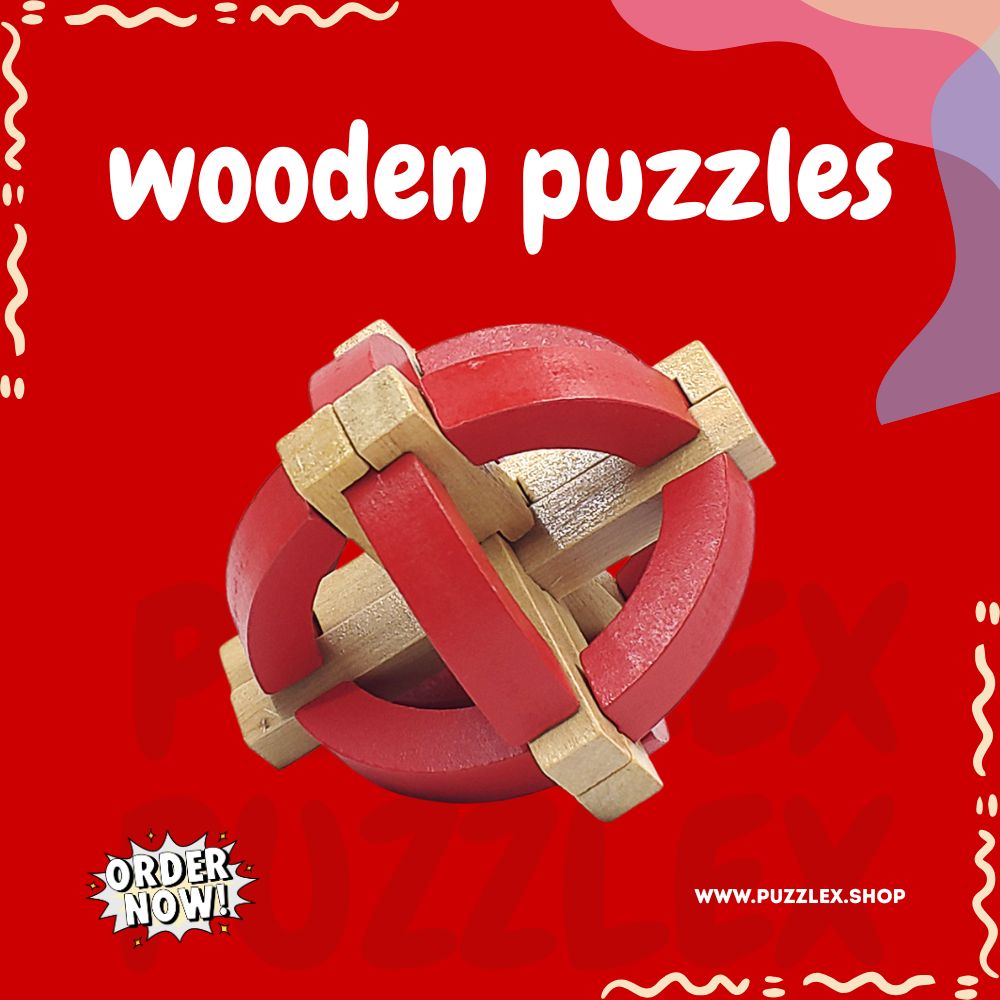
With so many options, selecting the best IQ puzzle games can be overwhelming. Use these criteria to find a puzzle that fits your needs and skill level.
| Criterion | What to Look For | Best for You |
|---|---|---|
| Material | Wood vs plastic vs cardboard | Wooden IQ puzzle – durable, tactile, premium. Plastic – cheaper, often 3D. Cardboard – disposable jigsaws. |
| Difficulty Level | Beginner, Intermediate, Expert | IQ puzzle for beginners should be level 1-3 (easy). Adults may prefer 4-6 (hard). |
| Type | Logic, 3D, packing, brain teaser | Match to your weakest cognitive area (e.g., spatial – pick 3D). |
| Brand & Reviews | Puzzlex Shop, Hanayama, Professor Puzzle, etc. | Look for well-rated best IQ puzzle collections with verified user feedback. |
| Price | Premium sets can cost ৳4,500 or more | Invest in quality if intended for long-term use. High-end wooden puzzles offer superior craftsmanship. |
For those seeking an IQ puzzle for adults that combines challenge with elegance, wooden puzzles are unmatched. Shops like Puzzlex Shop offer high-IQ wooden sets with intricate interlocking designs and 3D assemblies. Their premium items are priced around ৳4,500 and include free shipping, making them a great choice for collectors and brain-training enthusiasts.
Best Wooden IQ Puzzle Recommendations
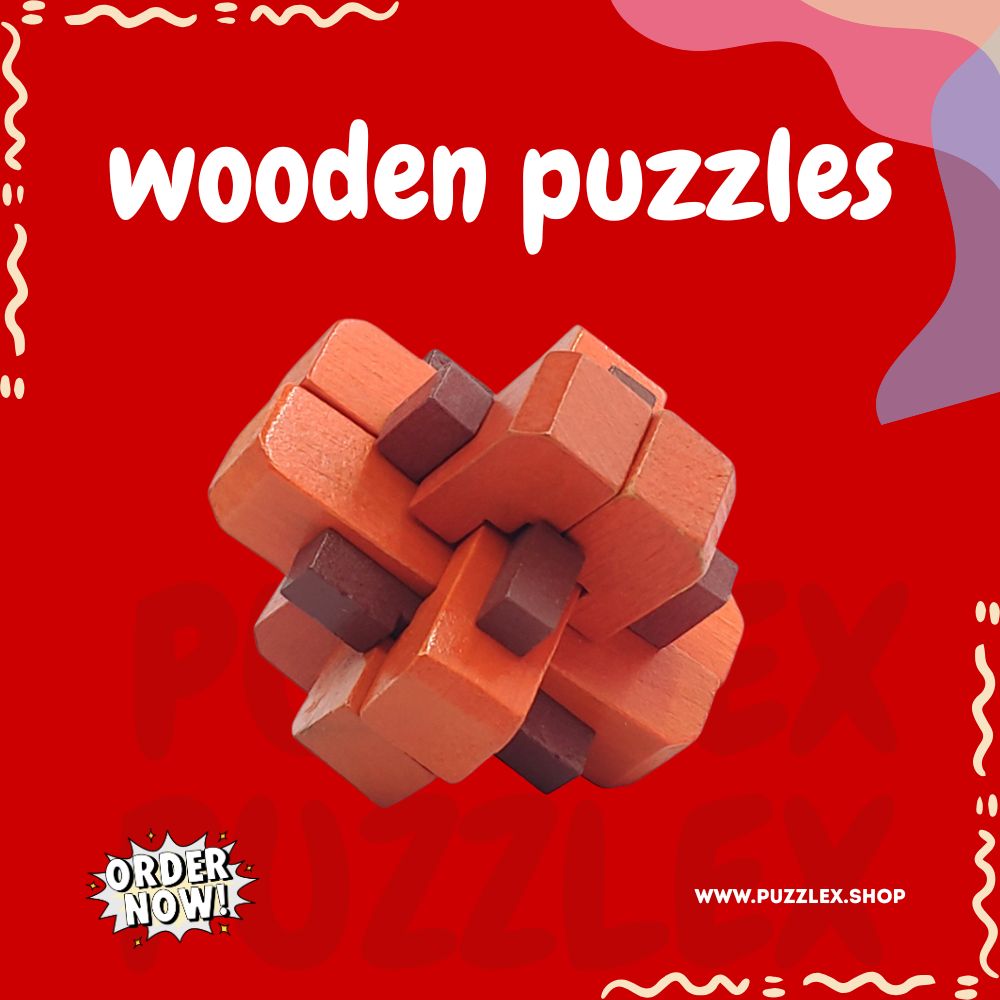
When searching for the best wooden IQ puzzle, consider these proven types:
- 6-piece interlocking burr puzzles – classic, satisfying, moderate difficulty.
- Wooden puzzle boxes with secret compartments – combine dexterity with logic.
- 3D assembly spheres or animals – excellent spatial workout.
- Packing puzzles (e.g., tangram variants) – test geometry skills.
Premium wooden puzzles often use sustainably sourced materials and have a polished finish. They double as desk ornaments, adding aesthetic value to cognitive training.
Integrating IQ Puzzles into Your Daily Routine
To maximize IQ puzzle benefits, aim for at least 25 minutes of deliberate puzzle-solving each day. This can be broken into two 12-13 minute sessions. Keep a dedicated puzzle area free from distractions. Rotate between types — one day a logic puzzle, the next a wooden 3D puzzle — to challenge different cognitive domains. Over weeks, you’ll notice improvements in mental speed, memory recall, and problem-solving confidence.
Author Profile
Puzzlex Shop is a specialized online retail store based in Bangladesh that focuses on high-IQ puzzles and cognitive training tools. The shop markets its products as proactive alternatives to digital screen time, targeting teenagers, adults, and collectors who wish to stimulate critical thinking and visual-spatial reasoning. Their curated inventory includes complex interlocking wooden designs, 3D geometric assemblies, mathematical jigsaws, and intricate wooden puzzle boxes — all chosen to push cognitive boundaries. With a local phone number (01318-730036) and free shipping on all orders via its website, Puzzlex Shop makes premium puzzle access easy. Products like their high-IQ wooden sets (priced around ৳4,500) are designed to activate both brain hemispheres, foster neuroplasticity, and improve memory. The store operates with a belief that a challenging puzzle is the best investment you can make in your mental fitness.
Frequently Asked Questions
What is an IQ puzzle?
An IQ puzzle is a mental challenge designed to test or improve intelligence-related skills such as logic, spatial reasoning, and problem-solving. It comes in many forms, from wooden brain teasers to logic grids.
How do IQ puzzles improve your brain?
They stimulate neuroplasticity, strengthen memory and concentration, and improve reasoning skills. Regular puzzle solving (≥25 minutes daily) has been shown to boost IQ scores by up to 4 points.
Are IQ puzzles good for adults?
Absolutely. Adults benefit from the cognitive maintenance and challenge. An IQ puzzle for adults can delay cognitive aging and provide a productive, screen-free hobby that sharpens everyday decision-making.
What is the best IQ puzzle for beginners?
Start with simple logic puzzles (Sudoku, nonograms) or a small 3D wooden puzzle with clear instructions. Look for puzzles labelled “level 1” or “easy” to avoid frustration.
Where can I buy high-quality wooden IQ puzzles online?
Stores like Puzzlex Shop in Bangladesh offer a curated selection of premium wooden IQ puzzles. Their collection includes interlocking designs, 3D kits, and puzzle boxes — all with free shipping.
Conclusion: Start Your Puzzle Journey Today
IQ puzzles are not just games — they are brain workouts backed by science. From improving memory and concentration to promoting neuroplasticity and protecting against dementia, the IQ puzzle benefits are profound. Whether you choose a best wooden IQ puzzle for its tactile elegance or a logic IQ puzzle for mental speed, the key is consistent practice. Begin with a puzzle that matches your current level, commit to 25 minutes daily, and watch your cognitive skills grow. The path to a sharper, more resilient brain starts with one piece at a time.
Written by Puzzlex Shop – your partner in cognitive excellence.